Risk Management

Getting Iterative with Risk Identification in Traditional and Agile Projects

Most teams start strong with risk identification—then stop. So lets talk about getting iterative with risk management!
PURE Project Manager Meeting
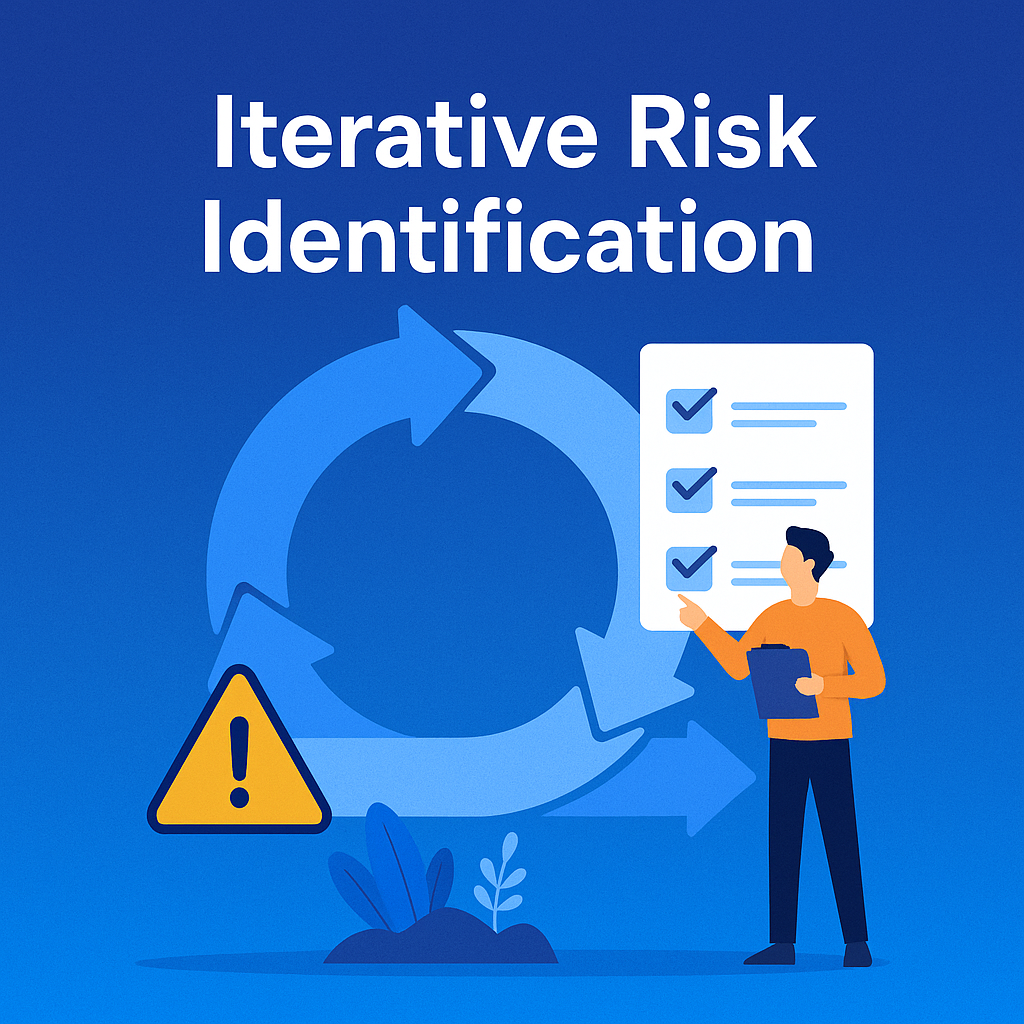
Risk Identification
Most project teams start strong with risk identification—gathering stakeholders, brainstorming risk events, and documenting a clean register. But fast-forward a few weeks, and those risks are forgotten, the log is stale, and the team is reacting to new problems as if they were unpredictable.
 
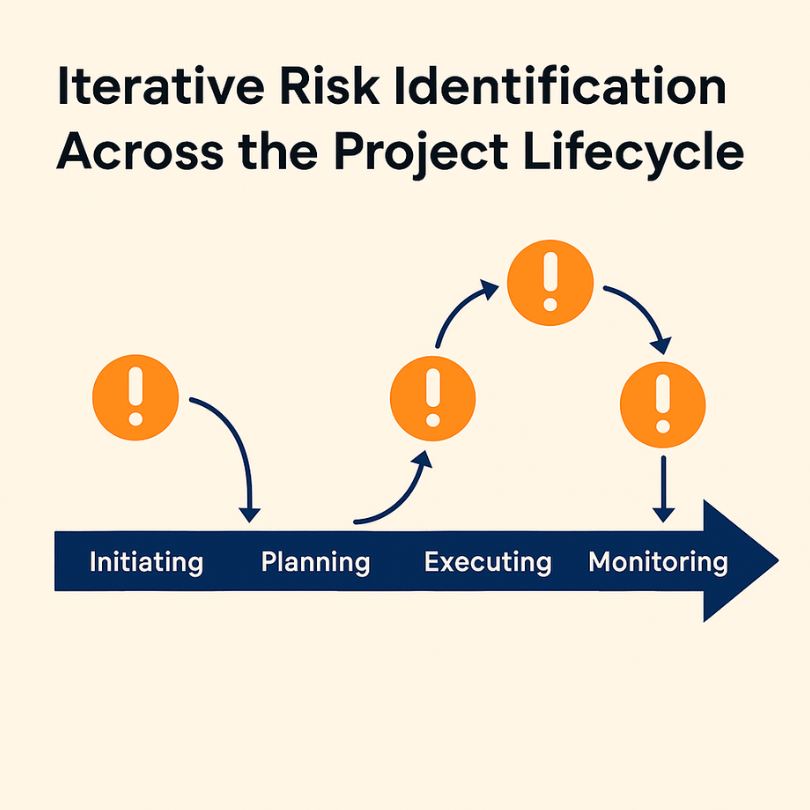
Here’s the reality: Risk Identification isn’t a One-Time Event.
 
It’s an iterative, ongoing process that adapts as your project progresses.
 
This guide breaks down how to apply iterative risk identification in both traditional and agile project environments—backed by the PMI-RMP® Exam Content Outline, the PMBOK® Guide, and real-world risk facilitation best practices.
 
By the end, you’ll have a better understanding on how to embed continuous risk discovery into your workflows, and why doing so can make or break your ability to deliver value.

Why Iterative Risk Identification Matters

If you’ve ever read “Start With Why“, you know the importance of asking this question on Why Iterative Risk Identification Matters.


In both predictive and adaptive projects, new risks emerge as:
  • Scope evolves
  • Stakeholder needs shift
  • Deliverables uncover new complexity
  • External conditions change (markets, vendors, compliance)


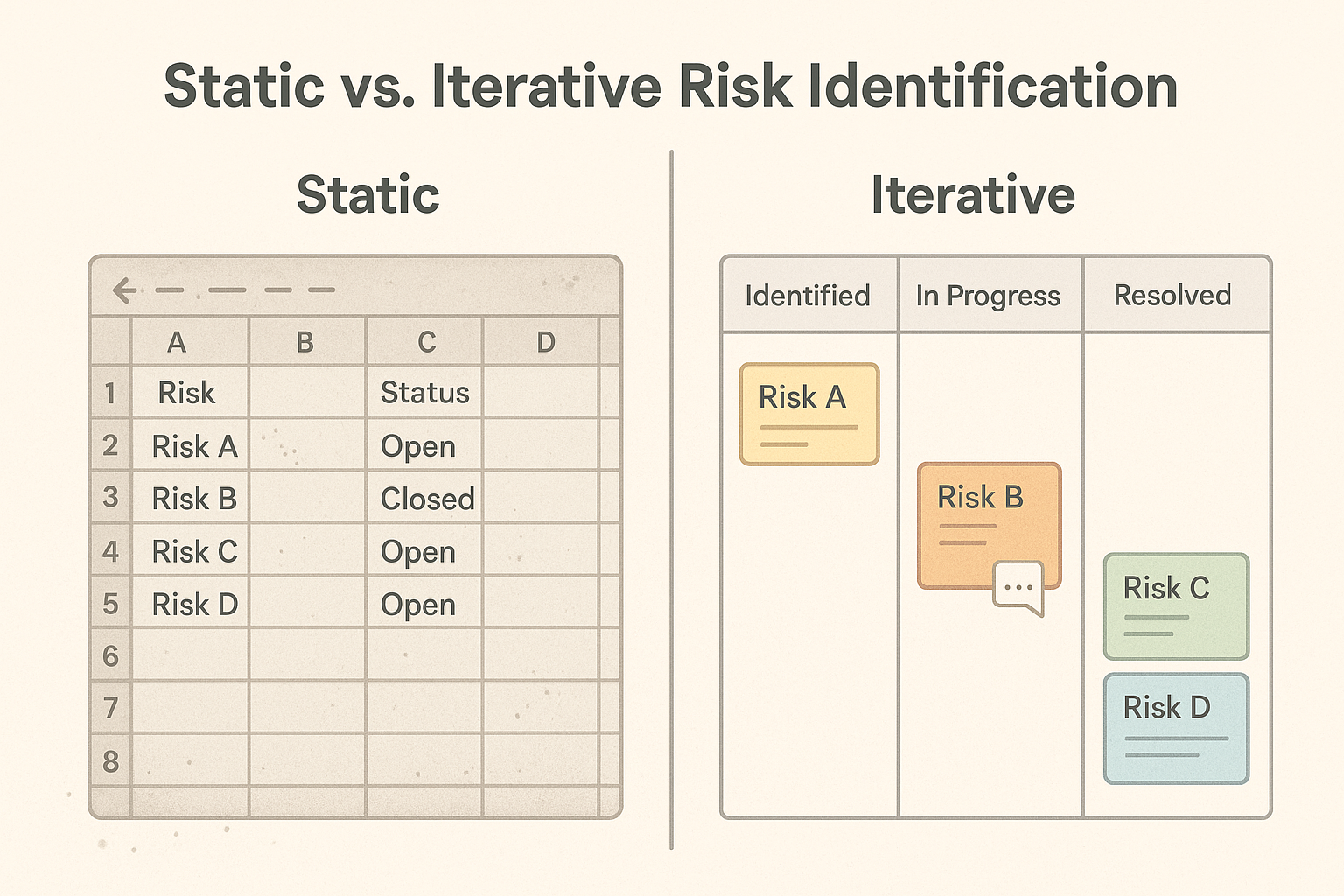
When risk identification is treated as a one-time planning event, the risk register quickly becomes outdated and irrelevant. Worse, teams start “discovering” risks that could have been identified only after they become issues.
“Static vs. Iterative Risk Identification”

PMI’s 2025 Pulse of the Profession highlights that professionals with strong business acumen actively anticipate and adapt to risks—not just react to them. Iteration is at the heart of this mindset.

Iterative Risk Identification in Traditional (Predictive) Projects

Traditional projects often follow structured planning cycles. That makes it easy to assume risk identification is only needed upfront. But traditional approaches benefit greatly from planned iteration points.

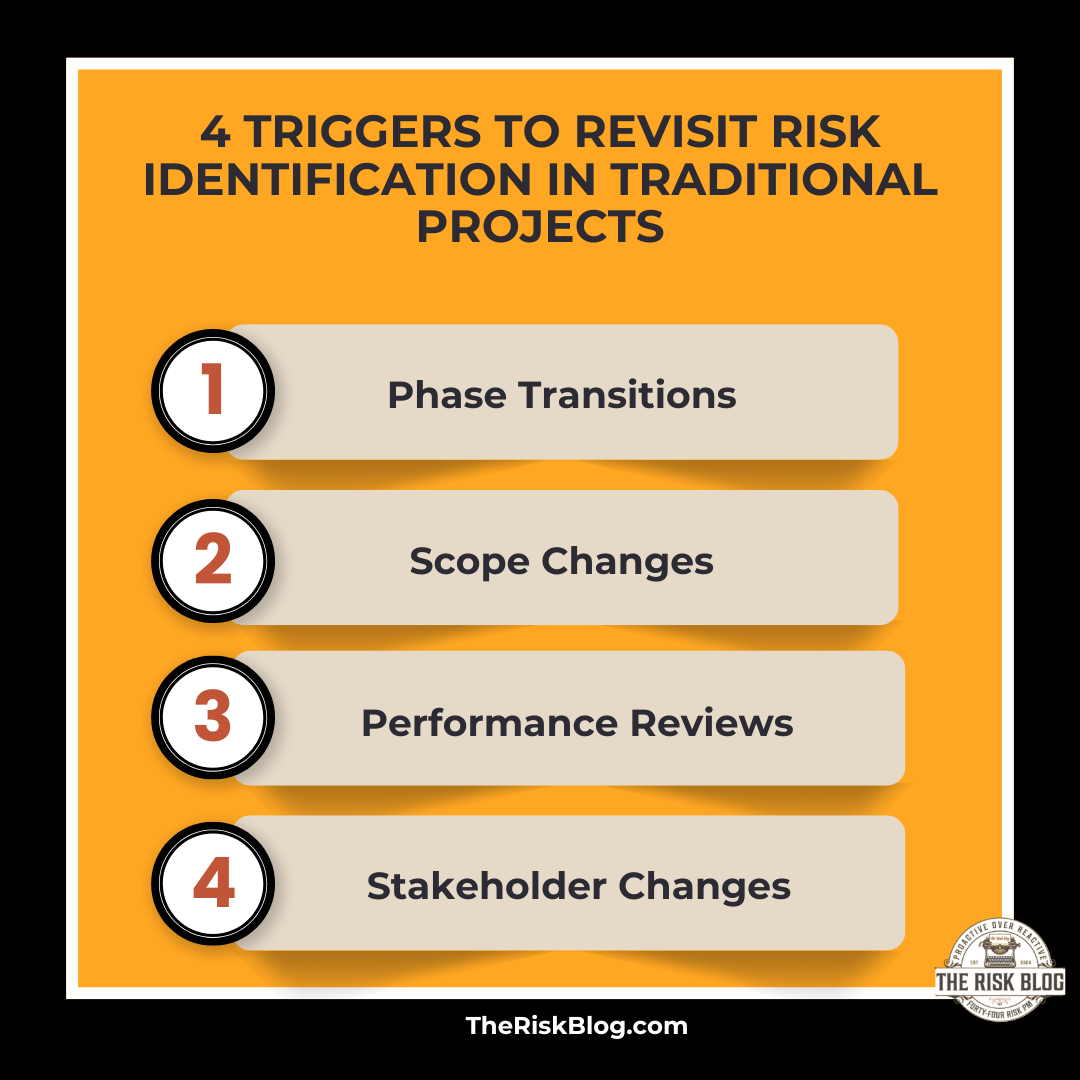
Embed Iteration Using Triggers:

  • Phase transitions: Between planning and execution, or testing and deployment
  • Scope changes: Approved change requests often create new risk paths
  • Performance reviews: Delays or overspending often reveal root-cause risks
  • Stakeholder updates: Their priorities and perceptions evolve too

Techniques to Use:

  • Mid-project risk identification workshops
  • Weekly/Bi-Weekly/Monthly review meetings with a risk spotlight (based on project size)
  • Prompt lists (e.g., PESTLE or TECOP) used at each milestone
RISK IDENTIFICATION

Iterative Risk Identification in Agile Projects

Agile teams embrace uncertainty by design. That makes them ideally suited for continuous risk identification.


But only if the team is aware and empowered to surface risks.

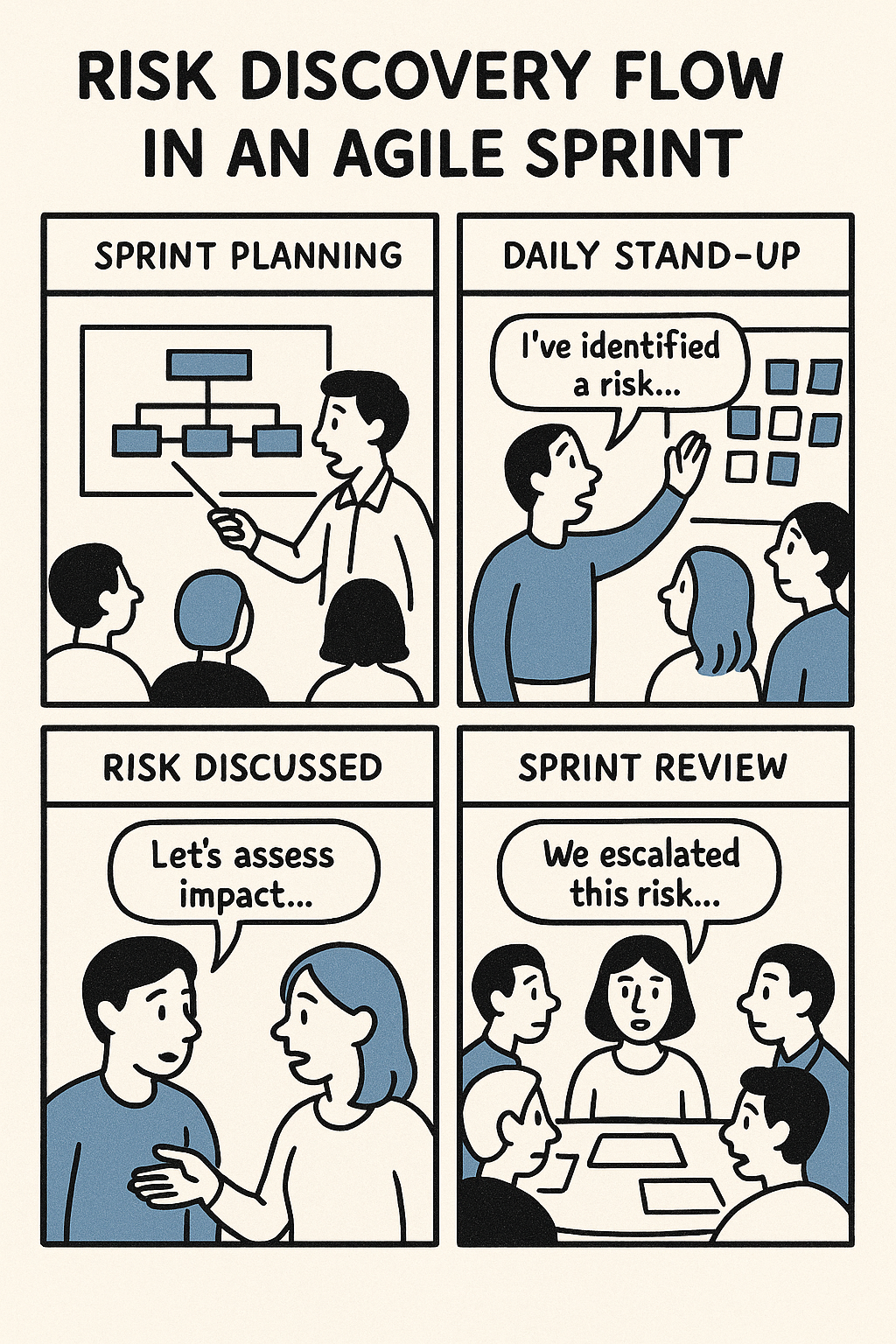
Natural Points for Identification:

  • Sprint planning: Evaluate risks tied to new user stories or dependencies
  • Daily standups: Highlight emerging blockers
  • Sprint reviews: Gather stakeholder input and surface future threats
  • Retrospectives: Reflect on process and team health


Agile teams benefit from using a “risk register,” but the risks are reviewed and tracked differently with Risk Adjusted Backlogs, Risk Stories to address high priority risks, and risk Kanban boards.

Supportive Techniques:

  • Create a “Risk Backlog” separate from or embedded in the product backlog
  • Maintain a Kanban board of known risks and their mitigation status
  • Use risk prompts in standups and retros (“Any new blockers?” → “Could they escalate into risks?”)
Risk discovery
Cultural Note: In agile environments, risk surfacing depends on psychological safety. Encourage openness by treating risk reporting as proactive leadership—not negativity.    

Bridging Both Worlds: Iteration in Hybrid Projects

Most real-world projects are neither fully predictive nor fully agile. They’re hybrid.


Risk identification needs to reflect that reality.

Strategies to Blend Approaches:

  • Schedule formal risk reviews aligned with phase gates and sprint reviews
  • Empower both project managers and product owners to log risks
  • Centralize risk documentation, but allow decentralized risk identification
  • Encourage multi-level ownership: Governance lead + delivery lead
RISK MATRIX

How to Make It Happen: Operationalizing Iterative Risk Identification

This is where many teams fail—not because they don’t care about risk, but because the process isn’t built to evolve.


Let’s change that.

1. Build a Living Risk Register

A living risk register is more than a spreadsheet—it’s a real-time system of visibility and adaptation.


Add columns such as:
  • Last Updated By / On
  • Status Trend (Increasing, Decreasing, Resolved)
  • Risk Review Date
  • Linked Deliverable or Sprint


Use shared tools (Google Sheets, Smartsheet, Jira, DevOps) to allow open access and contributions.
Risk Register

2. Tie Risk Identification to Project Rhythms

In traditional teams:
  • Add “New Risk Check” to phase kickoff meetings
  • Review key risks at every change control board
In agile teams:
  • Review risks alongside sprint planning
  • Include “what changed?” prompts in retros
In hybrid teams:
  • Create a risk cadence calendar visible to the whole team
  • Use collaboration tools (Confluence, Notion) with tagging for filters (e.g., external, legal, process)

3. Reinforce It With Culture

Risk identification thrives in teams that:
  • Recognize that surfacing risks early is a strength, not an inconvenience
  • Celebrate lessons learned from near-misses
  • Track not just risk resolution—but who raised them and when
This is where strong facilitation, trust, and transparency matter.
How to Run a Risk Workshop Course Material
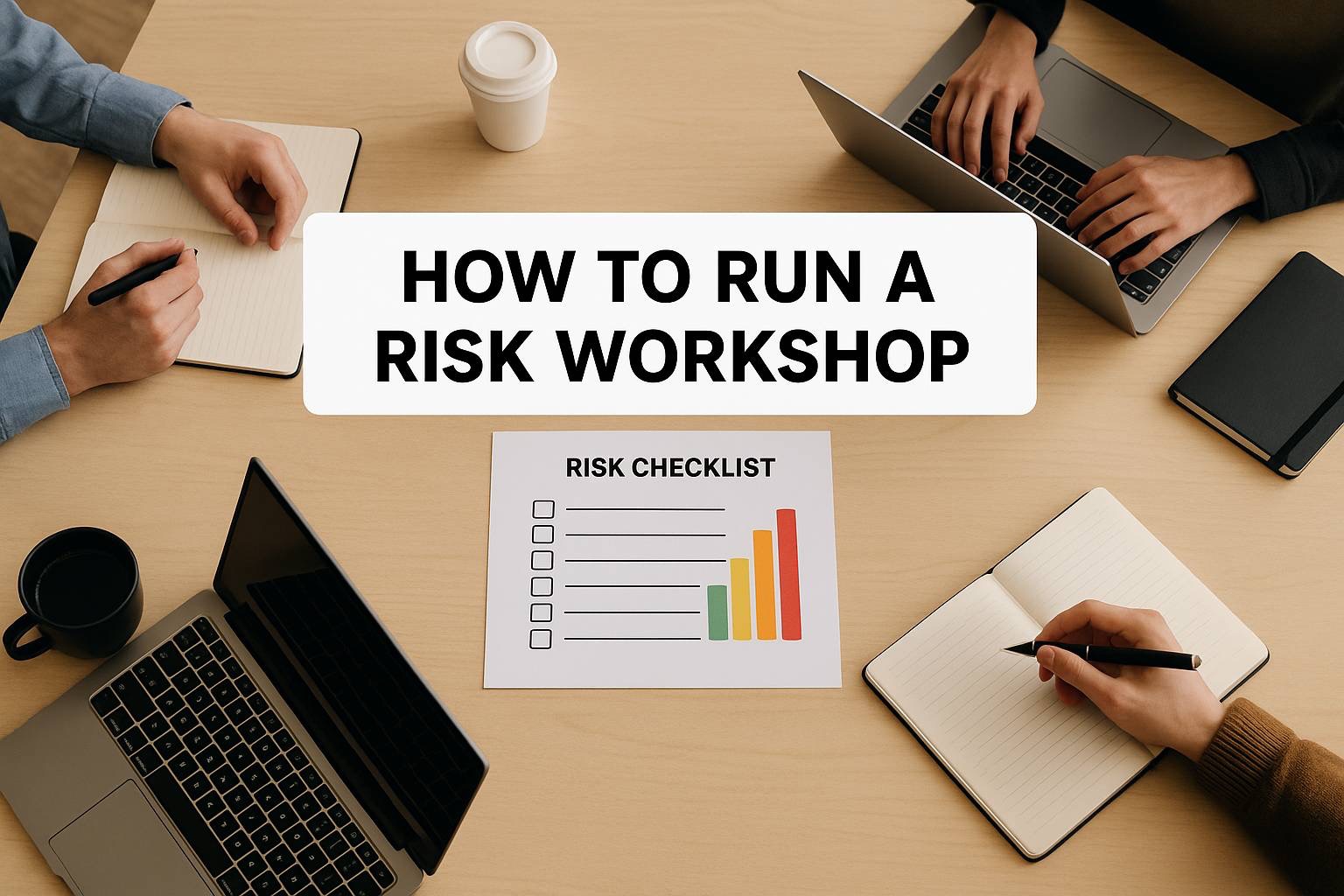
How to Run a Risk Workshop Title

Final Thoughts: A Living Risk Process Is a Leadership Asset

Iterative risk identification isn’t just a PMI best practice—it’s a mindset shift. It turns risk management from a stale compliance task into a living, responsive strategy that protects value and builds trust.


Whether you use phases or sprints, spreadsheets or Scrum boards, the key is consistency, visibility, and adaptability.


Treat risk identification as a rhythm, not a reaction. That’s how you lead with foresight.

Bonus Section: What Makes a Risk Register “Living”?

Just in case you were wondering, here’s a quick overview of what we mean by “living”:
Traditional Register
Living Risk Register
One-time input
Continuously updated
Hidden from team
Shared and visible
Spreadsheet-only
Integrated into workflows
No review schedule
Tied to project rhythms
Owner-driven only
Team-contributed

How to Run a Risk Workshop

Want to bring this to life in your team?
 
 
You’ll leave with confidence, structure, and tools to lead risk identification that evolves with your project.
 
 
Includes bonus guides on living risk registers, stakeholder prompts, and facilitation checklists.

Nice to meet you, I’m Russ Parker.

PMP®, PMI-RMP®, PMI-ACP®
PMI-ATP Instructor – PMP® & PMI-RMP®

This analysis was prepared by 44Risk PM LLC, specializing in PMI-RMP® and PMP® certification training with a focus on practical, real-world risk management.

An Approved PMI-Authorized Training Partner

Connect with me on Linkedin
Subscribe to my YouTube
Find me on Substack

“Stay Proactive Over Reactive”

“The PMI-Authorized Training Partner seal, PMP®, PMI-RMP®, and PMI-ACP® are registered marks of the Project Management Institute, Inc.”

Related Posts

Looking for free resources and support?

Whether you’re just starting or deep into studying, the 44Risk PM community gives you access to free resources, structured guidance, and a place to ask real questions. No pressure. Just practical support.