You’ve probably heard the whispers of the 2026 PMP Exam Changes — again. But this time, it’s not just about tweaking terminology or refreshing domains.
Starting July 2026, PMI is moving the PMP from a knowledge-based test to a practical, scenario-driven exam. This shift reflects how project management operates in the real world: fast-moving, context-heavy, and deeply rooted in decision-making.
Sound intimidating? It doesn’t have to be. This guide breaks down the upcoming PMP changes, explains why they matter, and shows you exactly how to prepare. Whether you’re mid-study or just starting out, you’ll leave with a smarter game plan.
What’s are the 2026 PMP Exam Changes Around Question Types?
These aren’t just cosmetic updates. They’re designed to test how well you apply project knowledge — not just how well you recall it. PMI is clearly moving to assess business acumen, decision-making, and leadership in action — not just memorization.
Why You Should Care: This Isn’t Just a Format Shift
Let’s be honest — PMP prep already feels like a marathon. So why should you care that the exam is introducing visual charts or scenario threads?
Because the exam is becoming a reflection of reality.
Today’s project professionals are expected to interpret data, mediate conflicts, and drive outcomes — all without a pause button. These new formats are testing exactly that.
In fact, PMI’s Pulse of the Profession 2025 report emphasized that the top performers in project roles are no longer just tactical executors — they’re strategic thinkers with business acumen.
This exam evolution is proof: PMI is aligning certification with what top employers demand.
Lets Break It Down these 2026 PMP Exam Changes.........
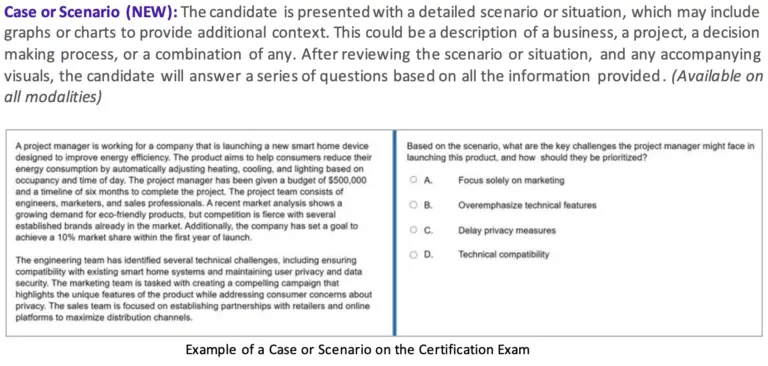
Case-Based Questions: Mini Dramas, Real-World Decisions (New in 2026)
Graphic pulled from PMI's 2026 PMP® Exam Content Outline
These questions drop you into a project challenge — like navigating scope creep or a stakeholder conflict. You’ll be asked to solve a sequence of related questions based on the same scenario.
It’s not about what you know. It’s about what you would do. Think of it as: “If this happened on your project… what’s your move?”
Prep Tip: Practice with scenario walkthroughs and decision-tree exercises. These aren’t one-answer problems — they require judgment, sequencing, and situational awareness.
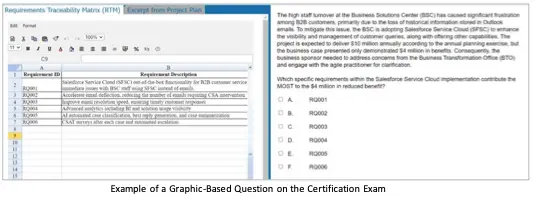
Graphic-Based Questions: Can You Read the Room or the Chart (New in 2026)
Graphic pulled from PMI's 2026 PMP® Exam Content Outline
You’ll be shown a Gantt chart, risk matrix, or other visual diagram and asked to interpret it.
For example:
“Based on this burn-down chart, what’s your next step as a project manager?”
It’s a shift from definition recall to data interpretation — a critical skill in agile and hybrid environments.
Prep Tip: Start analyzing visuals from your own projects. Practice drawing insights quickly and connecting them to project goals or risks.
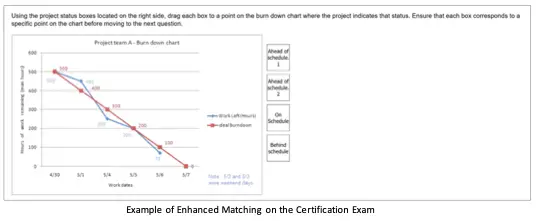
Enhanced Matching: It’s More Than Just Memory
Graphic pulled from PMI's 2026 PMP® Exam Content Outline
These questions ask you to match terms with definitions, roles with responsibilities, or tools with outcomes — but often with subtle differences that require more than surface-level understanding.
Prep Tip: Use flashcards strategically — group similar concepts and practice differentiating between them, not just naming them.
This analysis was prepared by 44Risk PM LLC, specializing in PMI-RMP® and PMP® certification training with a focus on practical, real-world risk management.
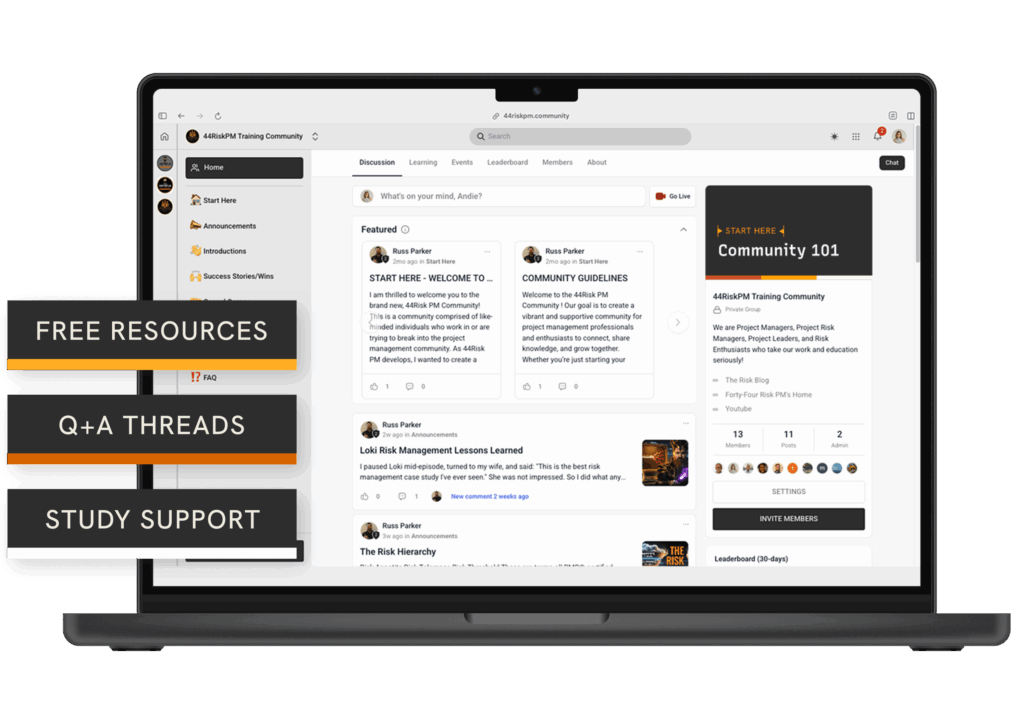
Whether you’re just starting or deep into studying, the 44Risk PM community gives you access to free resources, structured guidance, and a place to ask real questions. No pressure. Just practical support.