A Step-by-Step Guide to Capturing and Managing Project Risk
Every successful project manager knows risk is inevitable. But unmanaged risk? That’s a fast track to missed deadlines, blown budgets, and eroded trust.
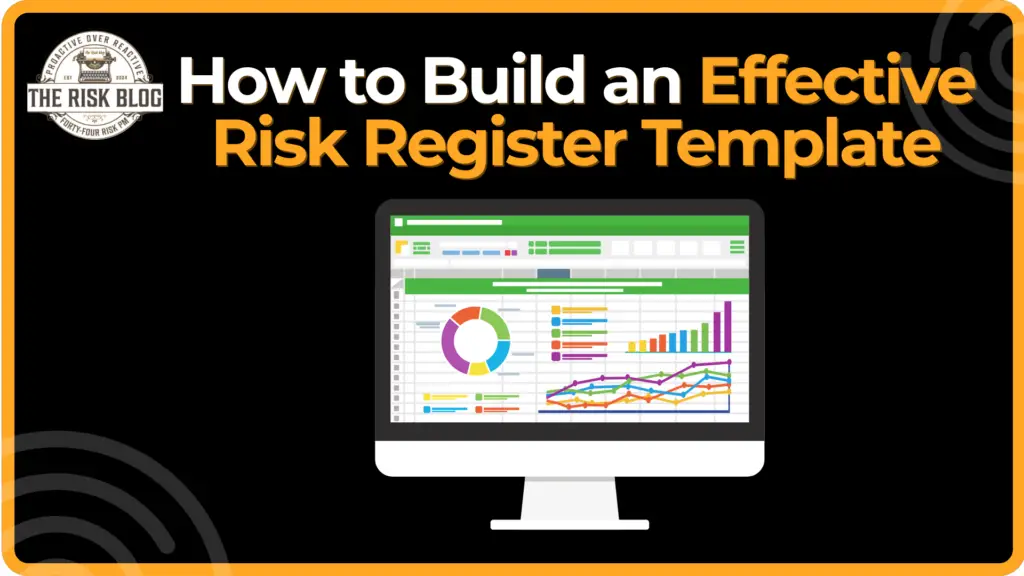
If you’ve ever struggled with scattered notes, vague issue trackers, or last-minute surprises, it’s time to get strategic. An effective risk register template is your command center for staying proactive, aligned, and in control.
In this quick guide, I’ll show you how to build and use a risk register that’s clear, actionable, and aligned with PMI’s best practices.
What Is a Risk Register?
A risk register is a centralized tool used to document and manage project risks across the life cycle. It helps project teams:
- Record potential risk events (both threats and opportunities)
- Evaluate each risk’s probability and impact
- Prioritize risks using a scoring system
- Define response strategies (e.g., mitigate, transfer, accept)
- Assign owners and follow-up deadlines
- Track the status and resolution of each risk over time
Think of it as your project’s early warning radar—and your first line of defense when the unexpected hits.
Free Download: Get the Risk Register Template
Why Is a Risk Register Important?
According to PMI’s 2025 Pulse of the Profession, projects with structured risk management processes are more than twice as likely to meet their business goals.
Here’s why your risk register matters:
- Increases visibility and accountability: Risk owners know what they’re managing, and teams can align responses.
- Enables strategic thinking: Encourages proactive planning, rather than reactive scrambling.
- Improves stakeholder confidence: Shows executives and sponsors that risks are understood and under control.
- Feeds smarter decision-making: Helps you prioritize based on potential impact.
In short: no effective project happens without it.
What Should Be in a Risk Register?
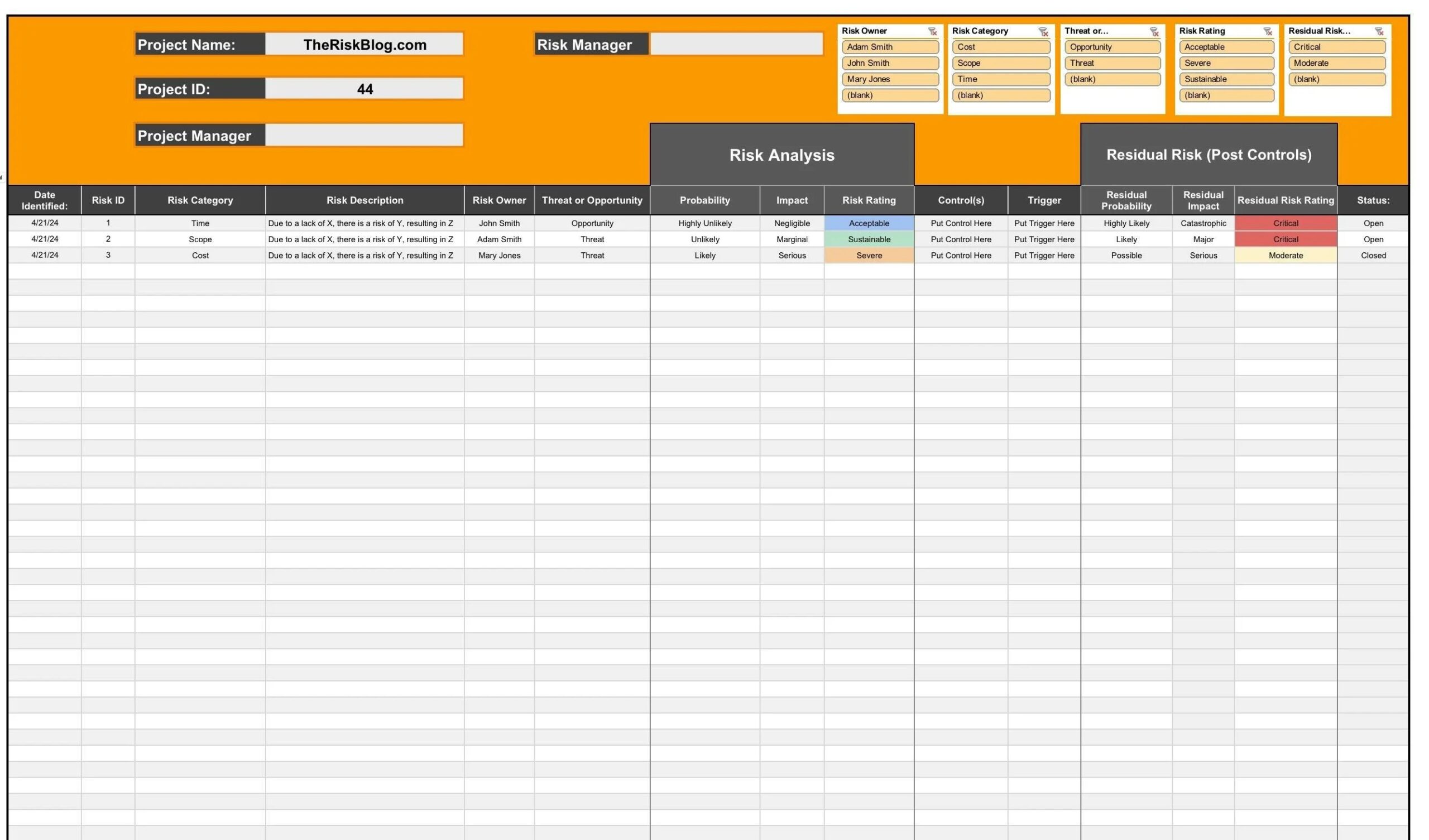
A simple spreadsheet can be powerful if it includes the right fields. Here’s what a complete register should capture:
Field | What It Does |
Risk ID | A unique number to track it |
Risk Description | Clear, concise summary of the risk |
Category | Technical, schedule, stakeholder, legal, etc. |
Probability | Likelihood it will occur (e.g. 1–5) |
Impact | Consequences if it occurs (e.g. 1–5) |
Risk Score (PxI) | Priority value based on threat level |
Response Strategy | Mitigate, Avoid, Transfer, Accept (or Exploit/Enhance for opportunities) |
Owner | Person accountable for managing it |
Status/Comments | Tracking notes, updates, or close-out remarks |

Optional bonus: Add due dates, triggers, residual risk, and contingency plans for deeper analysis.
How you build your risk register should be documented in your risk management plan.
Risk Register Example (Snapshot)
ID | Description | Category | Prob | Impact | Score | Strategy | Owner | Status |
R1 | Vendor delay may affect deployment | Schedule | 4 | 4 | 16 | Mitigate | PM | Monitoring |
R2 | Scope creep risk due to unclear requirements | Scope | 3 | 5 | 15 | Avoid | BA Lead | In Progress |
R3 | Opportunity to reuse previous designs | Opportunity | 2 | 4 | 8 | Exploit | Architect | Accepted |
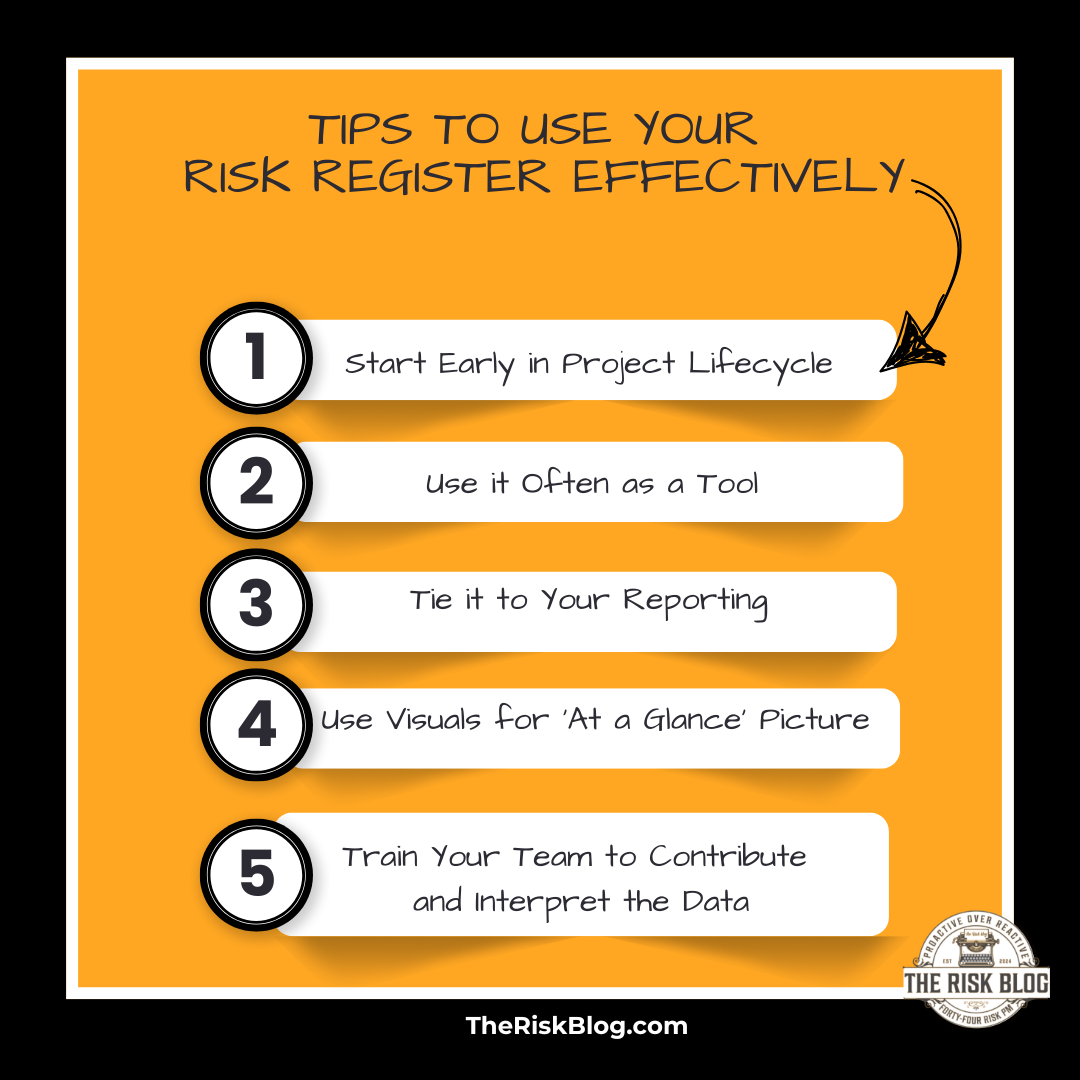
Tips for Using Your Risk Register Effectively
To get maximum value from your register:
- Start early: Initiate it during project planning—not mid-crisis.
- Use it often: Review in regular standups or risk reviews. Don’t let it go stale.
- Tie it to reporting: Roll up key risks in your status reports.
- Use visuals: Heat maps or RBS diagrams help communicate risk at-a-glance.
- Train your team: Ensure all stakeholders know how to contribute to and interpret the register.
Remember: A risk register isn’t “set it and forget it.” It evolves alongside your project.
Conclusion: Your Risk Radar Starts Here
An effective risk register is simple—but strategic. It brings order to uncertainty, equips you to lead with confidence, and gives stakeholders assurance that you’ve got a plan.
Whether you’re pursuing your PMP®, PMI-RMP®, leading enterprise programs, or managing your first project—this is a tool you’ll come back to again and again.
Call to Action
Download the Free Risk Register Template
Ready to put this into action?
and build your risk register like a pro!
The Risk Blog is a subset of Forty-Four Risk PM, LLC.