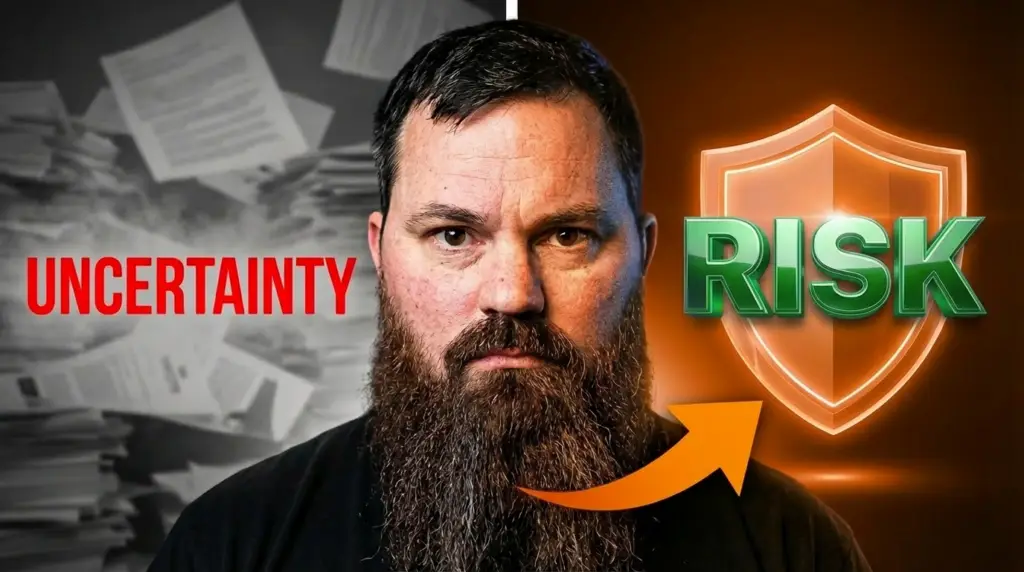
Why the PMBOK® 8th Edition Changes Everything
In November 2025, the Project Management Institute (PMI) released the PMBOK® Guide – 8th Edition, a long-anticipated update that signals a bold shift in how projects are led, delivered, and evaluated. For the first time, Risk Management is no longer just a knowledge area, it’s a core performance domain.
This is more than a structural update. It’s a strategic pivot.
If you’re preparing for the PMP® or PMI-RMP®, or leading projects in complex environments, understanding what’s changed — and what to do about it — is essential.
What's Changed in the PMBOK® 8th Edition?
Let’s break down the evolution of the PMBOK and how risk management has been elevated.
| PMBOK® Edition | Structure | Risk Role | Key Traits |
|---|---|---|---|
| 6th | 49 Processes across 10 Knowledge Areas | Risk = Knowledge Area | Traditional, linear, highly detailed |
| 7th | 12 Principles + 8 Performance Domains | Risk called Uncertainty, not defined as core | Values-based, principle-driven, agile-friendly |
| 8th | 6 Principles + 7 Performance Domains | Risk = Standalone Domain | Hybrid-ready, strategic, integrated |
Top PMBOK® 8th Edition Changes:
Risk is now a Performance Domain, equal to Scope, Schedule, Cost, Stakeholders, Resources, and Delivery.
Process groups are back — now called “Focus Areas” — giving structure to Planning, Execution, Monitoring, and more.
Principles are reduced from 12 to 6, making them more memorable and actionable.
Holistic thinking and sustainability are now embedded expectations, not optional extras.
Why This Matters for Project Managers
This isn’t just an editorial update. PMI’s 2025 Pulse of the Profession confirms that project managers are being called to step into strategic leadership roles, especially when it comes to navigating uncertainty.
Only 18% of project professionals demonstrate high business acumen — yet those who do outperform their peers in delivering value, staying on schedule, and managing budgets effectively.
The recognition of Risk as a performance domain validates what risk professionals have long known: risk management is project leadership.
It reinforces that risk isn’t a support function — it’s a driver of strategic decision-making, stakeholder trust, and long-term value.
What to Do About It: Your 5-Step Action Plan
Whether you’re leading programs, studying for your PMI-RMP®, or coaching delivery teams, here’s how to operationalize PMBOK 8’s risk-first mindset:
1. Reframes Risk as Value Protection
Stop treating risk as a reactive log. Start treating it as a strategic asset. Incorporate risk conversations in every performance domain — not just the risk register.
2. Update Your Risk Management Plan
Align your planning process to the new Focus Areas:
Planning → Identify, analyze, and prioritize risks early
Execution → Monitor assumptions and adjust risk responses
Monitoring → Track risk indicators as part of performance metrics
3. Adopt a Holistic View
One of the new principles is to “Adopt a Holistic View.” This means:
Think across silos
Anticipate system-level impacts
Incorporate external trends (like AI, ESG, geopolitical shifts)
4. Leverage AI and Data-Driven Tools
From PMI’s Leading AI Transformation report:
PMOs that integrate AI will expand their influence by anticipating risks, optimizing resource allocation, and driving real-time decision-making.
Use AI to power your Monte Carlo simulations, scenario planning, and predictive risk modeling.
5. Reposition Risk in Your Conversations
Speak the language of business value. Tie risk response plans to:
Time-to-market
Brand equity
ESG alignment
Portfolio resilience
This is how you become a strategic partner, not just a risk facilitator.
Final Thoughts: Risk Has Finally Taken the Stage
The PMBOK® Guide – 8th Edition is more than an update. It’s a redefinition of what it means to lead projects in today’s world.
By elevating Risk Management to a core domain, PMI is sending a clear message: if you want to lead successful projects, you must master uncertainty.
Key Takeaways:
PMBOK® 8 reframes risk as a performance domain, not just a knowledge area.
The guide reintroduces structure (focus areas) while embracing flexibility.
Project managers are being called to operate as strategic risk leaders — not just tactical executors.
Ready to Prepare for the PMI-RMP®?
Use the button below to see my upcoming PMP® Exam Prep Course Schedule.
About 44Risk PM, LLC
This analysis was prepared by 44Risk PM LLC, specializing in PMI-RMP® and PMP® certification training with a focus on practical, real-world risk management.
Contact:
Russ Parker
PMP®, PMI-RMP®, PMI-ACP®
PMI-ATP Instructor – PMP® & PMI-RMP®
Owner, Forty-Four Risk PM, LLC
Connect with me on Linkedin
Subscribe to my YouTube
“Stay Proactive Over Reactive”