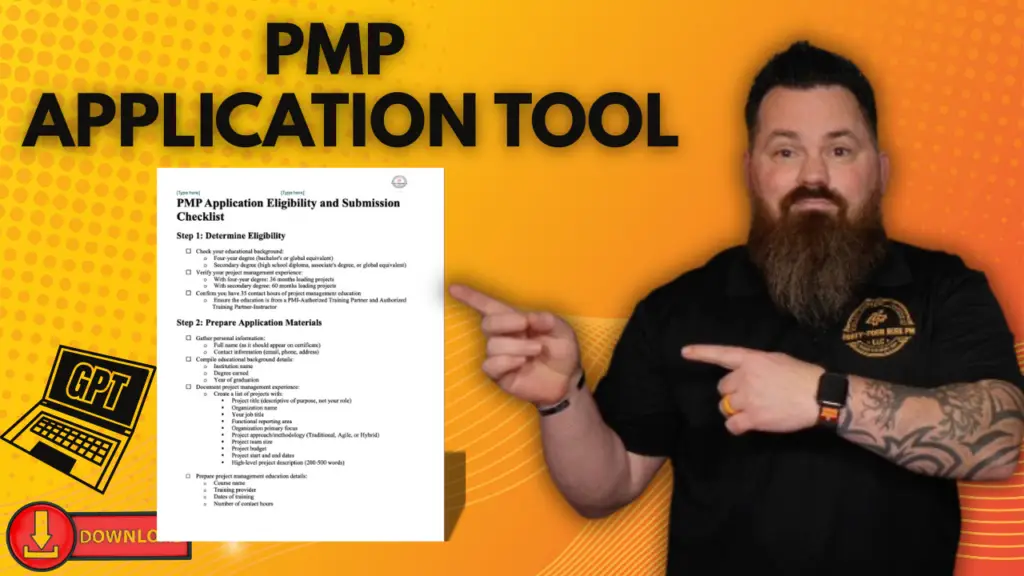
So, you’ve started the project management experience section of your PMP application — or maybe you’re one step away from hitting submit.
But there’s one looming fear holding you back:
“What if I get audited?”
You’re not alone. The word “audit” sparks anxiety in even the most seasoned project managers.
Here’s the truth: PMI application audits aren’t meant to punish you. They’re just there to validate your experience.
And the good news? You can prepare for an audit before it ever happens.
In this post, I’ll show you how to structure your project experience in a way that’s clear, compliant, and audit-ready. That way, even if you do get selected (only a small percentage are), you’ll be confident and ready.
5 Ways to Know Your Project Management Experience is Audit Ready!
1. You Can Provide Documentation for Every Project
If PMI asks about your project management experience, can you…
- Get a supervisor or colleague to sign off?
- Show records of your role in the project?
- Provide a certificate or letter for your PM education hours?
If not, now’s the time to start gathering these. You don’t need to submit them unless audited, but having them ready puts you ahead of the curve.
Bonus Tip: Make a folder now labeled “PMP Audit Docs”. Future-you will thank you.
2. You’ve Used PMI Terminology, Not Company Jargon
When reviewers see terms like “scope creep” or “stakeholder engagement,” they know you’re speaking their language.
Here’s a quick swap guide:
Instead of… | Say… |
“Ran team meetings” | “Facilitated team communications within Executing process group” |
“Built timelines” | “Developed project schedule using WBS and milestone mapping” |
3. Each Project Follows a Clear, Consistent Format
Avoid mixing formats — Just like writing status reports for your stakeholders, make what you write easy to digest.
And don’t get worried if you can’t hit ALL the process groups for each project.
Maybe you picked up a project from another PM mid way through or you are in the middle of the project you are submitting for the application.
These things happen. The trick is to show that you know how to manage the projects. You didn’t initiate that one project, but you did with the next one. So, make sure you list and call out the initiation work you did on the next project.
Your goal is to show proficiency in how the standards discuss project management.
4. You’ve Avoided Resume Copy/Paste
This one trips up so many candidates.
PMI isn’t looking for your job description — they want to see specific project work with start/end dates, leadership actions, and measurable results.
Not this:
“Led team of engineers and improved KPIs across product lifecycle.”
Instead write something like:
“Managed execution of a product development project through stakeholder analysis, task delegation, and iterative sprint planning. Resulted in 12% reduction in delivery time.”

5. You’ve Done a Final “Audit Test”
Before submitting, ask yourself:
- Could someone unfamiliar with my industry understand this?
- Are my descriptions 200–500 words each?
- Have I shown leadership across all five process groups?
If yes — you’re ready to submit (and even more ready if PMI taps you for an audit).
What Happens If You Are Audited?
It’s not as scary as it sounds.
Trust me. I’ve worked with and talked to dozens of people who have been audited. Some completing the audit in less than 48 hours, some needing only a couple weeks.
The key to getting it done quickly is preparation!
Here’s what the audit process looks like:
- You’ll be notified after submission — before you pay for the exam.
- You’ll receive a checklist of required documents:
- Proof of education
- Experience verification (signed by project contacts)
- You’ll have 90 days to submit them.
- PMI reviews and responds within 5–10 business days.
Pro tip? Most audits are cleared smoothly if your documents match your application. And you Don’t Lie!
Why This Step Scares People (and How to Flip It)
Most candidates fear the audit not because of the work — but because of imposter syndrome.
You might be thinking:
“What if my experience isn’t good enough?”
But here’s the truth: if you’ve led projects, you are qualified. The audit just confirms it.
Preparing your experience now is the boldest move you can make.
I’ve only met two people who PMI said their experience did not qualify for the exam and they needed to gain additional experience. Both of whom were able to pass the audit not too long after gaining additional experience in the field.
Set Yourself Up for a Smooth Submission
The PMI application audit isn’t something to fear — it’s something to prepare for.
Structure your experience properly, gather your documentation now, and you’ll not only avoid panic… you’ll pass with confidence.
The Risk Blog is a subset of 44Risk PM, LLC