
Scope creep in Agile projects involves the uncontrolled expansion of project requirements without corresponding adjustments in time, budget, or resources.
This issue arises from Agile’s dynamic and iterative process, making it a crucial aspect to manage. Unchecked scope creep can lead to delays, cost overruns, and project failure. This article will delve into what is scope creep in Agile, its causes, impacts, and effective strategies to prevent it.
Key Takeaways
Scope creep in Agile projects refers to uncontrolled changes and additions to project scope without adjustments to time, cost, or resources, often resulting from unclear project objectives and poor task prioritization.
Effective strategies to prevent scope creep include establishing a clear project scope, conducting regular backlog grooming, and maintaining consistent communication with stakeholders to manage expectations.
Utilizing Agile tools, such as Kanban boards and burndown charts, as well as formal change management processes, can help teams identify and mitigate scope changes early, ensuring project alignment and success.
Understanding Scope Creep in Agile
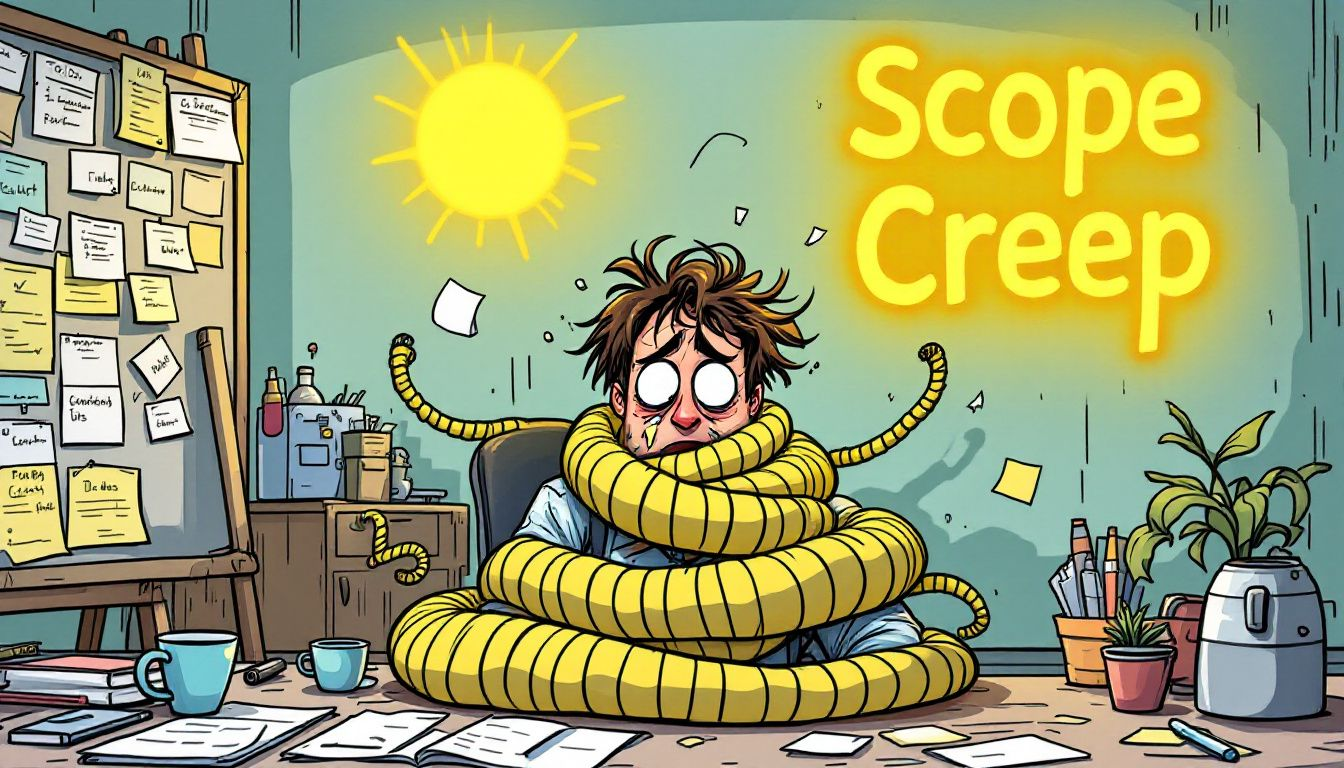
Scope creep refers to the ongoing, uncontrolled changes in a project’s scope that can occur without proper control procedures.
In Agile projects, this phenomenon is particularly challenging due to the iterative nature of the development process, where requirements are continuously evolving based on stakeholder feedback and market conditions. Unlike traditional project management, where changing requirements are often seen as planning failures, Agile methodologies embrace change, making it crucial to manage scope creep effectively.
One of the primary reasons scope creep occurs in Agile projects is unclear project objectives and ambiguous user stories.
When project goals are not well-defined, it leads to misalignment and misunderstandings within the team and with stakeholders. Furthermore, poorly defined project scope can significantly disrupt the project’s progress, leading to unnecessary tasks that extend beyond the original scope.
The impact of scope creep on Agile projects can be severe, leading to delays, cost overruns, and decreased team morale. When scope creep occurs, it distracts the team from their main objectives, causing confusion and wasted resources. Over time, this can create discontent within the team, leading to stress and frustration, which ultimately affects project success.
Thus, understanding and managing scope creep is critical for the successful execution of Agile projects.
Definition of Scope Creep
At its core, scope creep refers to the addition of new features or requirements to a project without corresponding adjustments to time, cost, and resources.
In Agile projects, scope creep often arises from
Unclear project objectives
Ambiguous user stories
These make it essential to establish a well-defined project scope from the outset. Unlike traditional project management, Agile methodologies allow for variable and adaptable scopes to accommodate incremental development based on continuous feedback.
A poorly defined project’s scope can lead to significant misalignment and misunderstandings within the team and with stakeholders.
This often happens when project objectives are not explicitly outlined, leading to vague or incomplete statements of work that pave the way for scope creep. Therefore, having a clear and detailed project scope is crucial for managing scope creep effectively.
In Agile, managing scope creep involves setting clear boundaries for what is included in the project’s scope and ensuring that any changes are carefully evaluated and controlled. This requires a robust change management process and continuous communication with stakeholders to align expectations and prevent uncontrolled changes.
Causes of Scope Creep in Agile projects
Evolving requirements are a significant cause of scope creep in Agile projects.
As stakeholders provide input and market conditions change, new features and adjustments often become necessary, leading to an expanded project scope. This constant evolution can complicate the team’s efforts to stay on track, especially if frequent changes in stakeholder requests are not properly managed.
Another critical factor is poor task prioritization and lack of communication.
When priorities are not clearly defined, teams may find themselves working on tasks that do not align with the project’s main objectives, leading to uncontrolled changes and increased workload. Effective communication and clear prioritization are essential to prevent scope creep and ensure that the project remains focused on its original goals.
Impact of Scope Creep in Agile Projects
Scope creep can have several adverse effects on Agile projects, including delays and cost overruns.
When scope creep occurs, it often leads to additional tasks and requirements that were not part of the original plan, consuming more time and resources than initially allocated. This can disrupt the project schedule and inflate the budget, making it challenging to meet deadlines and stay within financial constraints.
Moreover, scope creep can undermine project success by distracting the team from their main objectives. The constant addition of new requirements can cause confusion and lead to wasted resources, ultimately affecting team morale and motivation.
Over time, this can create a stressful work environment, leading to disengagement and decreased productivity. Therefore, managing scope creep is crucial for maintaining project focus and ensuring successful outcomes.
Identifying Scope Creep Early in Agile Projects
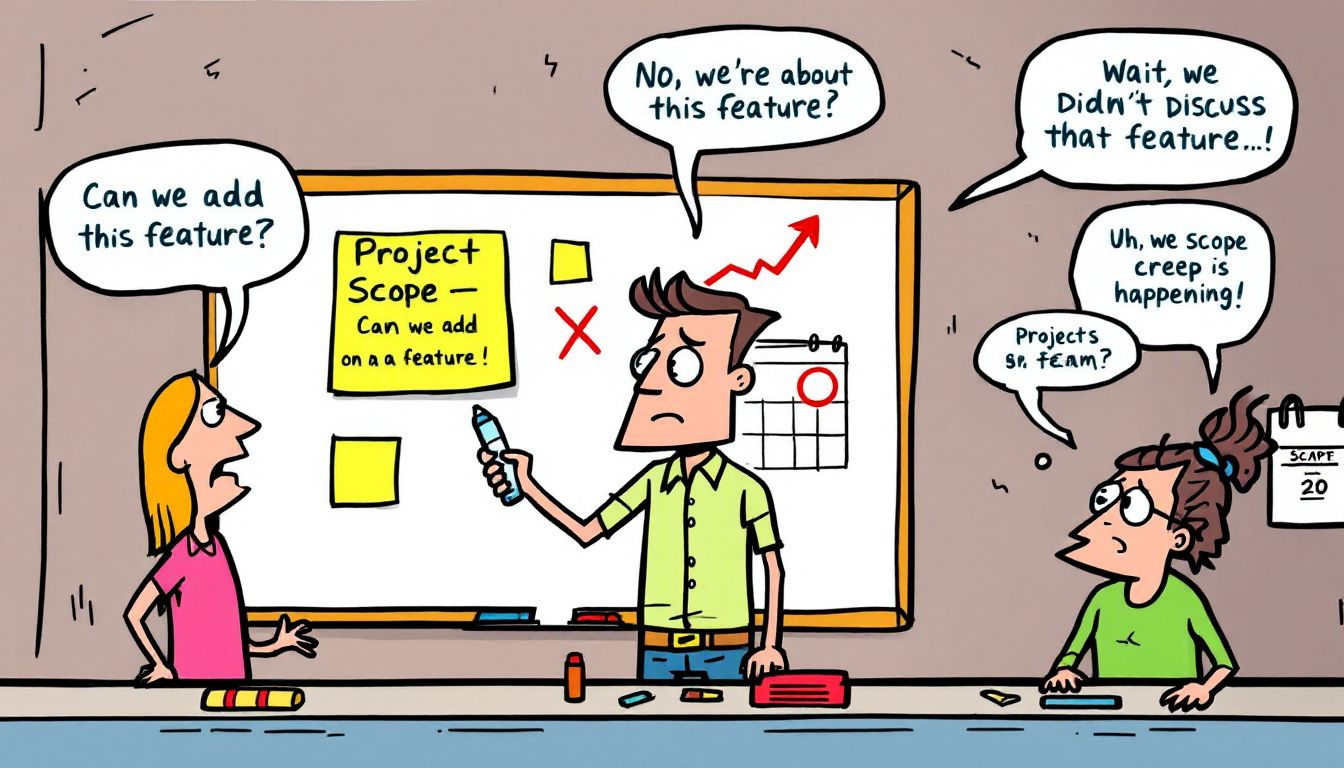
Identifying scope creep early is essential to prevent it from derailing your project.
Setting clear project goals helps align the team and stakeholders with the project’s requirements, reducing the likelihood of scope creep. Documenting the project requirements establishes agreed boundaries and a baseline before the project begins, ensuring that everyone is on the same page. A detailed project plan serves as a baseline for managing changes effectively, helping to mitigate scope creep as the project progresses.
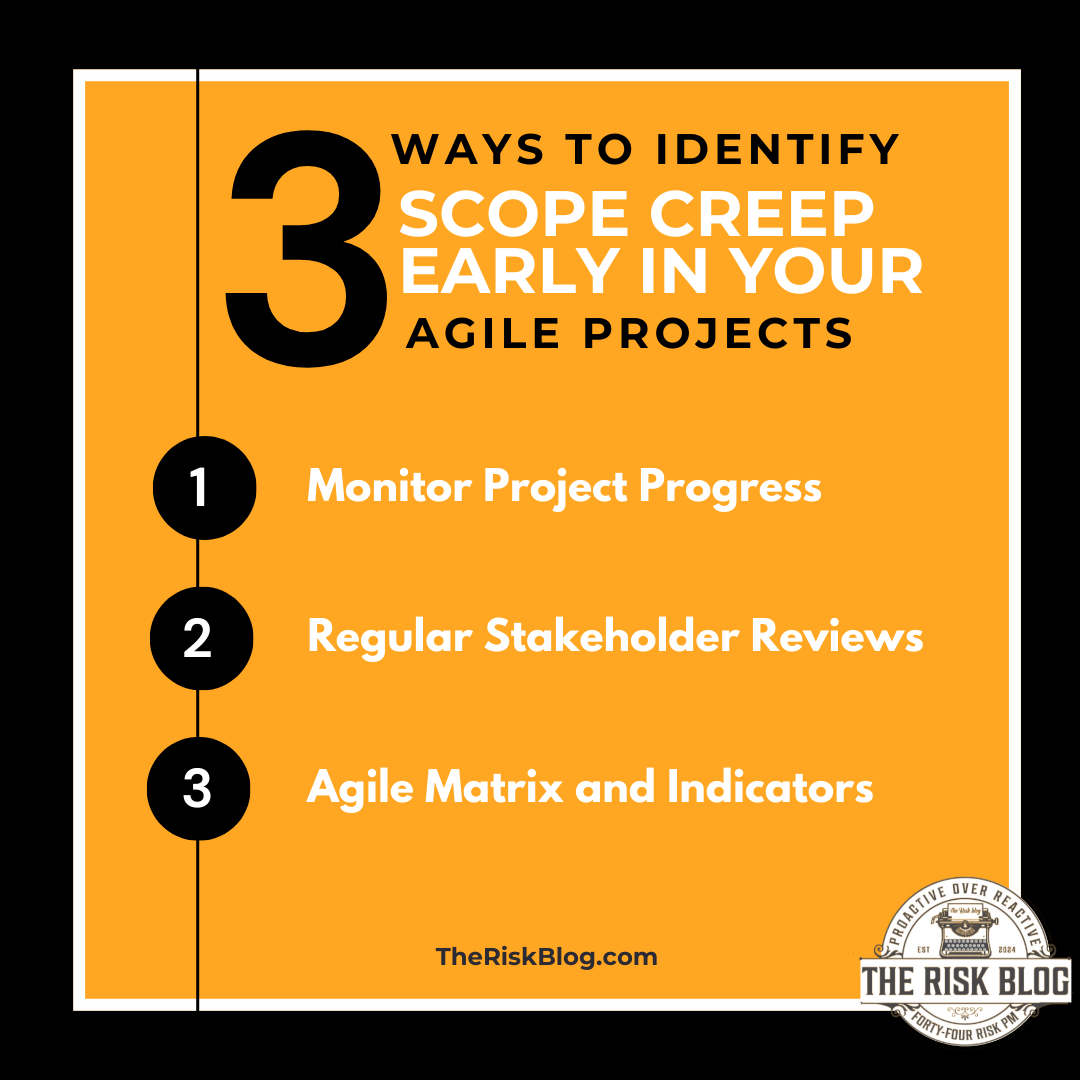
Regular monitoring of project progress is crucial for identifying potential scope creep. Agile tools like Kanban boards and burndown charts provide visual representations of the workflow and progress, helping teams detect when scope changes are occurring.
Frequent stakeholder reviews also play a vital role in identifying and addressing potential scope changes early, ensuring that any adjustments are communicated promptly.
Agile metrics and indicators, such as velocity metrics, are essential for monitoring performance and identifying issues like scope creep. By keeping a close eye on these metrics, teams can spot inconsistencies that may indicate scope adjustments and take corrective action before they become significant problems.
Monitoring Project Process
Monitoring project progress is vital for managing scope creep.
Agile tools like Kanban boards provide a visual representation of the workflow, helping teams identify when scope changes are occurring. These boards allow team members to see the status of tasks and any deviations from the planned scope, enabling early detection of potential scope creep.
Burndown charts (link to other blog article) are another essential tool for monitoring progress. These charts depict the actual versus estimated work during a sprint, allowing teams to track their progress and identify any discrepancies.
Using Epic and Release Burndown charts can also show team progress and remaining workload, highlighting any deviations from the planned scope. By utilizing these tools, teams can monitor their progress effectively and take corrective action to prevent scope creep.
Regular Stakeholder Reviews
Regular stakeholder reviews are crucial for managing scope creep in Agile projects.
Frequent engagement with stakeholders ensures that any scope adjustments are communicated promptly and that everyone remains aligned with the project’s goals. Open communication during agile ceremonies, such as sprint reviews and retrospectives, allows stakeholders to provide feedback and identify potential scope changes early.
This proactive approach helps prevent misunderstandings and keeps the project on track.
Agile Metrics and Indicators
Agile metrics and indicators play a vital role in identifying scope creep. Velocity metrics, for example, can highlight inconsistencies that may indicate scope adjustments. Monitoring these metrics helps teams track their performance and spot potential issues early. Metrics are crucial in Agile projects to ensure that the team is progressing as planned and that any deviations from the original scope are addressed promptly.
By keeping a close eye on these indicators, teams can effectively manage scope creep and maintain project alignment.
Strategies to Prevent Scope Creep in Agile
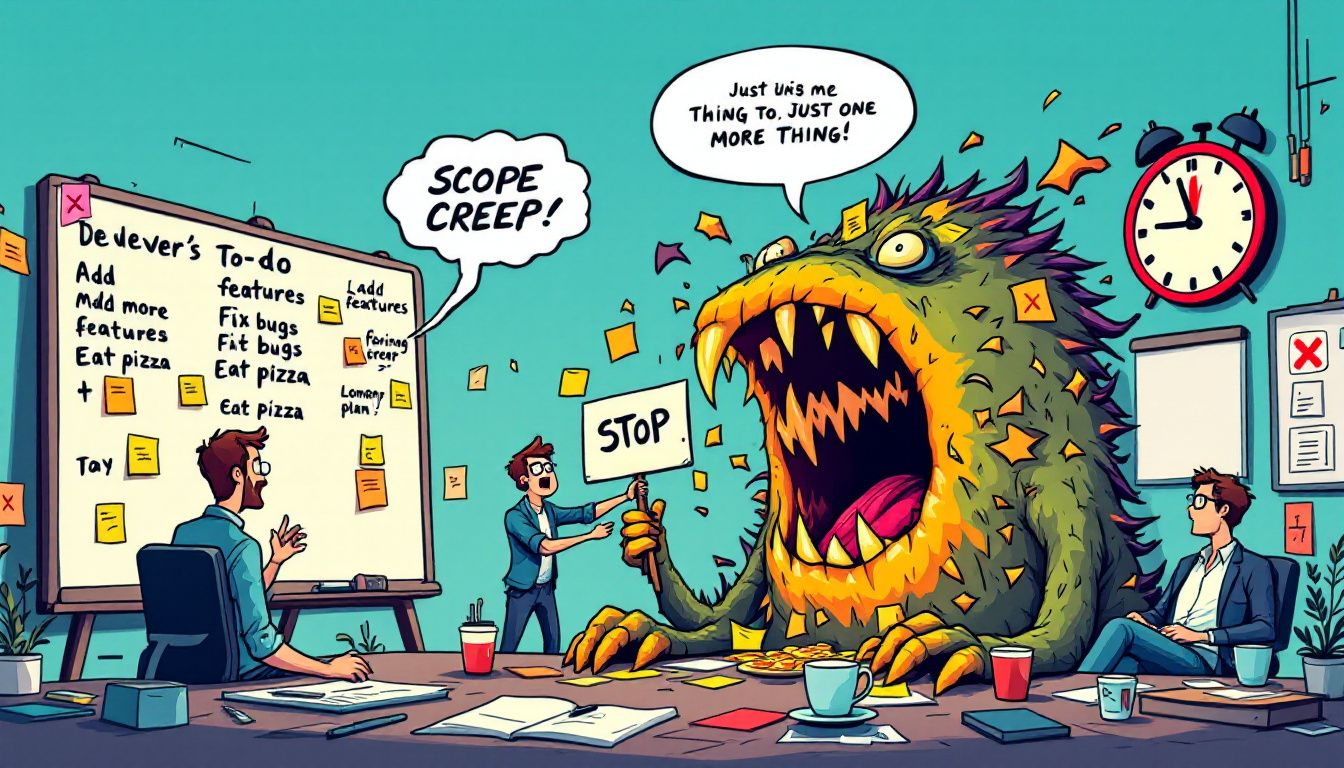
Preventing scope creep in Agile projects requires a combination of:
Clear project scope
Effective communication
Robust management practices.
Maintaining a clear project scope helps avoid overextending resources and ensures that tasks align with the project’s original objectives.
Scope creep occurs when project demands exceed original limits, leading to increased workloads and potential disruptions. Utilizing backlog grooming sessions allows teams to review and adjust priorities aligned with project goals, effectively handling scope creep by managing changes in the backlog.
Project management tools can enhance team communication, helping to minimize misunderstandings that lead to scope creep. Discussing the change control process and required approvals with stakeholders is also crucial for preventing scope creep. Engaging in conversations to explain the negative impacts of change requests and discussing options helps manage scope effectively.
Effective management of scope creep requires strong leadership to keep projects aligned with their primary objectives. Assessing the impact of proposed changes and acting quickly can help mitigate the effects of scope creep. When proper leadership strategies and frameworks are established, scope creep is preventable, ensuring successful project outcomes.
Clear Definition of Done
Establishing a well-defined ‘Definition of Done’ is crucial for preventing scope creep in Agile projects. This definition ensures that all team members have a common understanding of what constitutes task completion, setting clear boundaries for tasks and establishing expectations early.
The Definition of Done outlines when a task is considered complete, helping to prevent scope creep by ensuring that tasks do not extend beyond their intended scope. By setting these boundaries, teams can maintain focus and avoid unnecessary work, ultimately contributing to project success.
Effective Backlog Grooming
Regular backlog grooming sessions are an essential strategy for managing scope creep in Agile projects. These sessions provide an opportunity to reassess and realign priorities in response to scope changes, ensuring that tasks align with project goals. During backlog grooming, teams add requirements, context, priority, and estimates to backlog items, arranging them by priority level to ensure focused work. This process helps in identifying potential scope creep early and making necessary adjustments to keep the project on track.
Factors considered when setting priorities for backlog items include business value, complexity, cost, and readiness for development. Using Kanban boards assists teams in visualizing workflows and managing project tasks to prevent unauthorized changes.
By regularly grooming the backlog, teams can effectively manage scope creep and ensure that the project progresses smoothly.
Iteration Planning and Review
Conducting thorough iteration planning meetings is key to preventing scope creep in Agile projects. These meetings help teams stay focused on immediate objectives and minimize distractions that lead to scope creep.
Regular reviews during iteration planning provide an opportunity to assess progress, identify potential issues, and make necessary adjustments to keep the project aligned with its goals. By continuously planning and reviewing iterations, teams can maintain control over the project’s scope and ensure successful completion.
Managing Scope Changes in Agile Projects
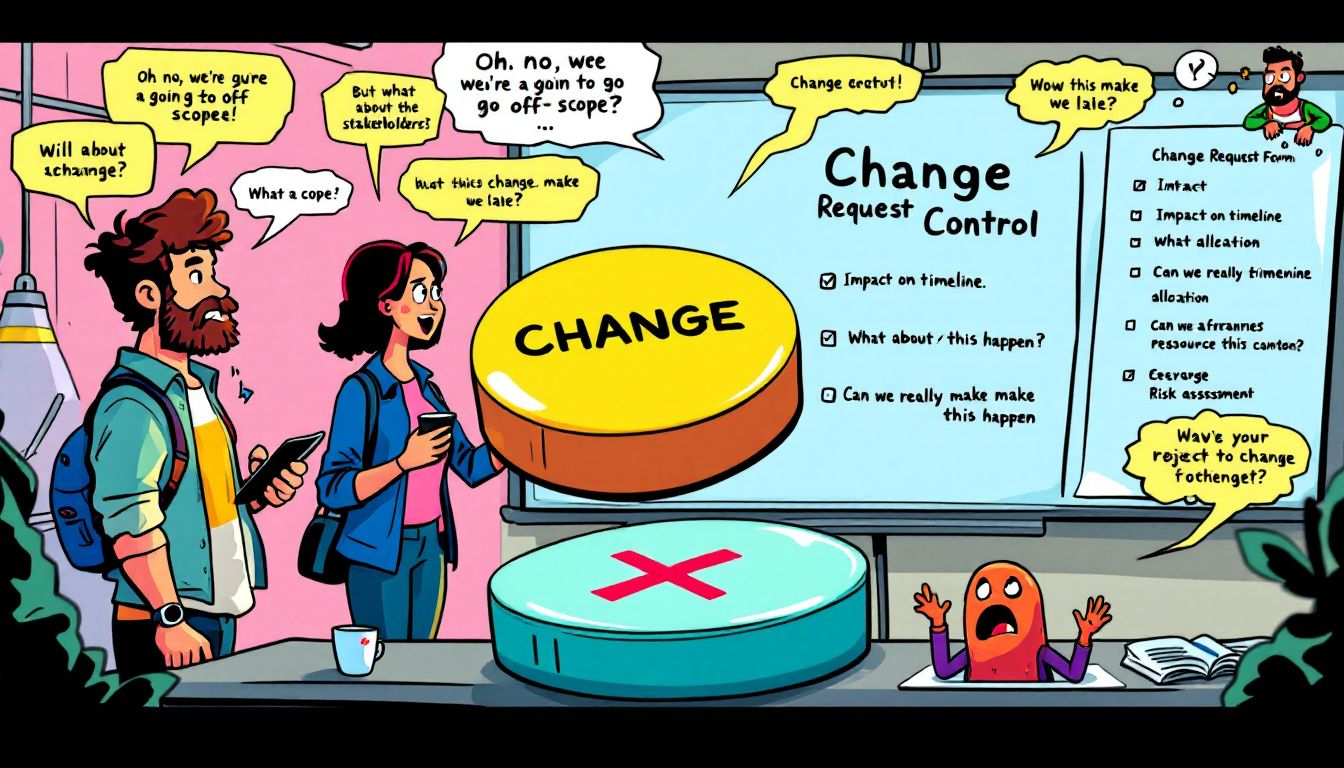
Managing scope changes in Agile projects involves clear communication and proactive planning throughout the project lifecycle. Regular communication is crucial to keep everyone informed about changes and helps control scope creep. Developing a collaborative team to discuss project impacts plays a significant role in managing scope creep, as it fosters collaboration among team members and stakeholders.
When facing scope creep, project managers should inform stakeholders of additional costs and delays for approval, ensuring that any changes are documented and communicated effectively. A clear project scope, a visible project plan, and the project’s timeline are essential for maintaining control during the project lifecycle.
Addressing changes in scope involves handling issues directly and documenting everything, which helps in preventing misunderstandings and maintaining alignment with project goals. When scope creep occurs, it is crucial to document everything and communicate with both the team and stakeholders to mitigate its impact.
Change Control Process in Agile
A well-defined change management plan is crucial for addressing modifications effectively within an Agile project. The purpose of a change management plan in Agile projects is to define procedures for managing changes, ensuring that all team members are aligned with the current project scope. Regularly updating project documentation ensures that any adjustments to the project scope are properly documented and approved, helping to prevent scope misunderstandings.
Establishing a formal change control process helps ensure that any adjustments to the project scope are documented and approved by a change control board. This process involves submitting and reviewing change requests to decide if they warrant altering the project scope. By maintaining a comprehensive Project Scope Statement, teams can define project boundaries and effectively manage scope changes.
Impact Assessment and Re-Baseline
Assessing the ramifications of scope changes includes evaluating unnecessary time and costs. The written project scope should include project deliverables and how they relate to project objectives, ensuring that any changes are aligned with the project’s goals. Once scope changes are approved, the project schedule or project plan should be re-baselined to reflect the new scope.
After updating impacted tasks in the project plan, create a new version of the project plan while saving the old one. This helps in tracking different versions of a project plan and maintaining a clear record of changes.
Re-baselining the project helps to remind stakeholders of the project’s scope and realign project requirements, ensuring that everyone is on the same page.
Communication with Project Team
Transparent communication with stakeholders is vital for managing expectations and mitigating scope creep. It is crucial for the team to understand why scope changes occur and their implications on future work. When scope changes are identified, the project manager should proactively raise concerns with clients and stakeholders to ensure that any changes are properly communicated and managed. Keeping lines of communication open is essential for effective project management, especially when discussing scope changes.
Teams can leverage centralized software platforms to ensure consistent communication, reducing the chances of misunderstandings that lead to scope creep. Tools like Jira help maintain communication about scope changes through dashboard synchronization.
Early discussion of potential scope creep allows time for mitigation plans and client discussions, helping to manage scope changes effectively.
Tools and Techniques to Handle Scope Creep
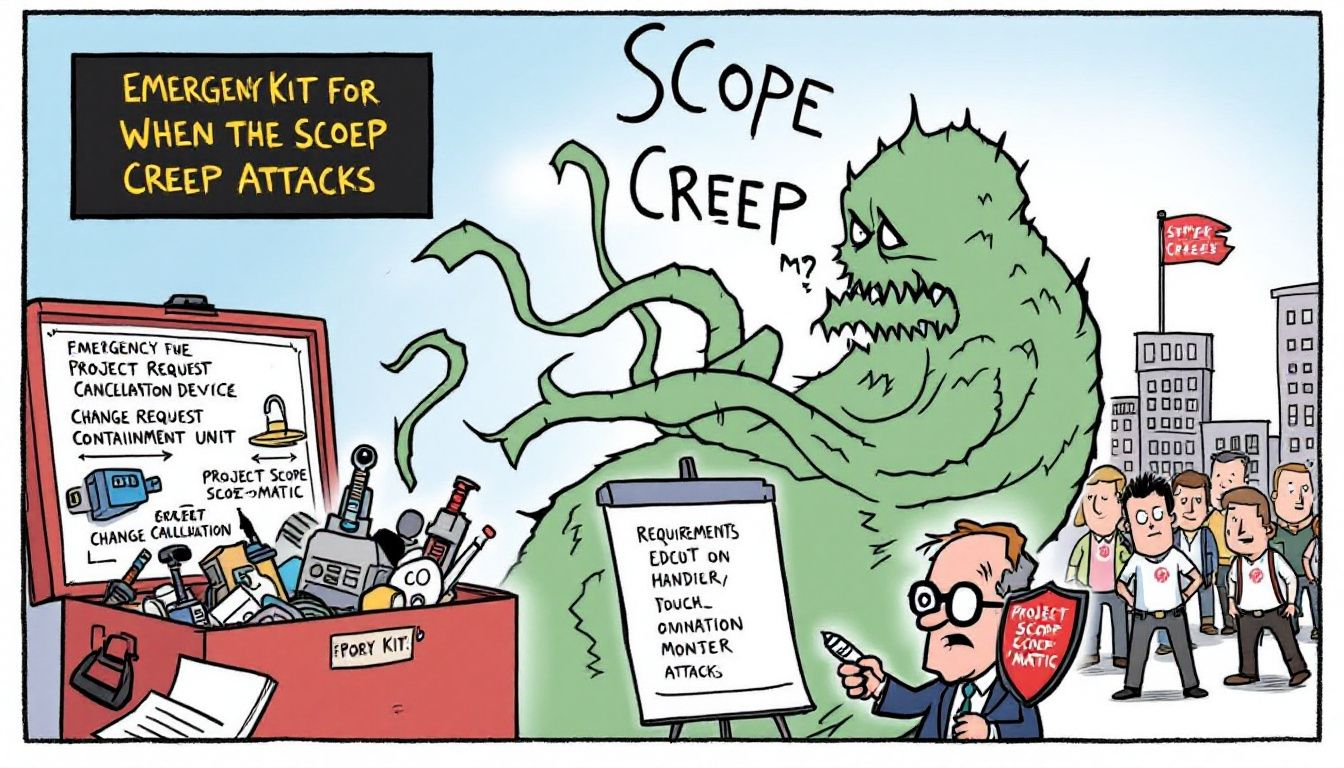
Utilizing visual tools can significantly help project managers maintain control over a project’s scope. Visualization tools help teams understand task dependencies and manage changes to the project scope appropriately. Tools like Jira Portfolio can help manage the impact of scope creep by providing a clear overview of project tasks and their statuses.
Effective use of these tools contributes to smoother management of scope changes in Agile projects.
Agile Project management Software
Agile project management software is essential for effectively managing scope and tracking changes throughout the project lifecycle. Trello, for example, offers visual boards to track tasks and facilitate scope management. For managing backlog on Jira, the Excel-like Bulk Issue Editor is highly recommended.
By using these tools, teams can maintain control over their projects and prevent scope creep.
Visualization Tools
Visualization tools like Gantt charts and Kanban boards are invaluable for managing scope creep in Agile projects. Gantt charts outline the project timeline and milestones, providing a clear overview of the project’s timeline. Kanban boards visualize workflows, helping teams manage tasks and identify potential scope changes.
Centralized epic dashboards offer a comprehensive view of project tasks and their statuses, aiding in effective scope management.
Documentation Process
Effective documentation practices are crucial for maintaining clarity and alignment throughout the project lifecycle. Best practices include keeping easy access to key documents like plans and scope of work. Documentation helps track changes and ensures that all stakeholders are aware of the scope and any updates that may arise.
By maintaining clear and consistent documentation, teams can mitigate the risks of scope creep and enhance project success.

Best Practices for Mitigating Scope Creep in Agile
Mitigating scope creep in Agile projects involves establishing clear goals, accurate prioritization, and maintaining flexibility. Clear goals help in cutting out unnecessary work that doesn’t align with the project’s objectives. Accurate prioritization allows teams to understand workload and engage in efficient sprint planning, providing a clear picture of the project scope.
Implementing Agile methodologies encourages iterative development and allows teams to respond quickly to changes, helping to maintain project alignment.
Continuous Stakeholder Engagement
Continuous stakeholder involvement is crucial for aligning project goals with stakeholder expectations and managing potential changes. Regular feedback sessions with stakeholders help ensure that project expectations remain aligned throughout the development process. Effective communication among stakeholders is critical to mitigating scope creep in Agile projects.
By maintaining continuous engagement, teams can manage scope changes effectively and keep projects on track.
Flexibility and Adaptability
Flexibility and adaptability are essential for managing scope creep in Agile projects. Agile methodologies encourage adaptability in project plans to effectively respond to evolving requirements without causing project disruption. A flexible approach enables teams to modify plans and strategies in response to shifting project demands, minimizing disruptions caused by scope adjustments.
By maintaining adaptability, teams can incorporate necessary changes and ensure project success.
Training and team Alignment
Training and team alignment are critical for managing scope creep in Agile projects. Adequate project management training, soft skills, and knowledge of project management software can help project managers avoid scope creep.
Training is essential for equipping teams with the necessary skills to manage scope effectively in Agile projects. A well-trained team can significantly reduce the risks of scope creep and enhance project outcomes.
Summary
In conclusion, managing scope creep in Agile projects requires a proactive approach that includes clear project scope, effective communication, and robust management practices. By setting clear goals, engaging in continuous stakeholder communication, and utilizing appropriate tools and techniques, teams can prevent and mitigate the impact of scope creep. Remember, the key to successful Agile projects lies in adaptability, effective prioritization, and maintaining alignment with stakeholder expectations. By implementing the strategies discussed in this guide, you can ensure that your projects stay on track and achieve their goals.
Frequently Asked Questions
What is scope creep in Agile projects?
Scope creep in Agile projects is the uncontrolled expansion of a project’s scope, which occurs without corresponding adjustments to time, cost, or resources. This can lead to project challenges and inefficiencies if not managed effectively.
How can scope creep be prevented in Agile projects?
To prevent scope creep in Agile projects, establish clear project goals, maintain regular backlog grooming, ensure effective communication with stakeholders, and leverage project management tools. These practices will help maintain project focus and alignment.
What are some common causes of scope creep?
Scope creep often arises from evolving requirements, frequent changes in stakeholder requests, and inadequate task prioritization and communication. It is essential to establish clear project boundaries and maintain open dialogue to mitigate this issue.
How does scope creep imact Agile projects?
Scope creep negatively impacts Agile projects by causing delays, increasing costs, and reducing team morale, ultimately threatening the success of the project. It distracts the team from their primary objectives.
What tools can help manage scope creep in Agile projects?
To effectively manage scope creep in Agile projects, employing tools such as Jira, Trello, Kanban boards, and Gantt charts is crucial, as they enhance project visibility and communication. Effective documentation practices further support these tools by keeping all stakeholders aligned.


The Risk Blog is a component of the Forty-Four Risk PM,LLC