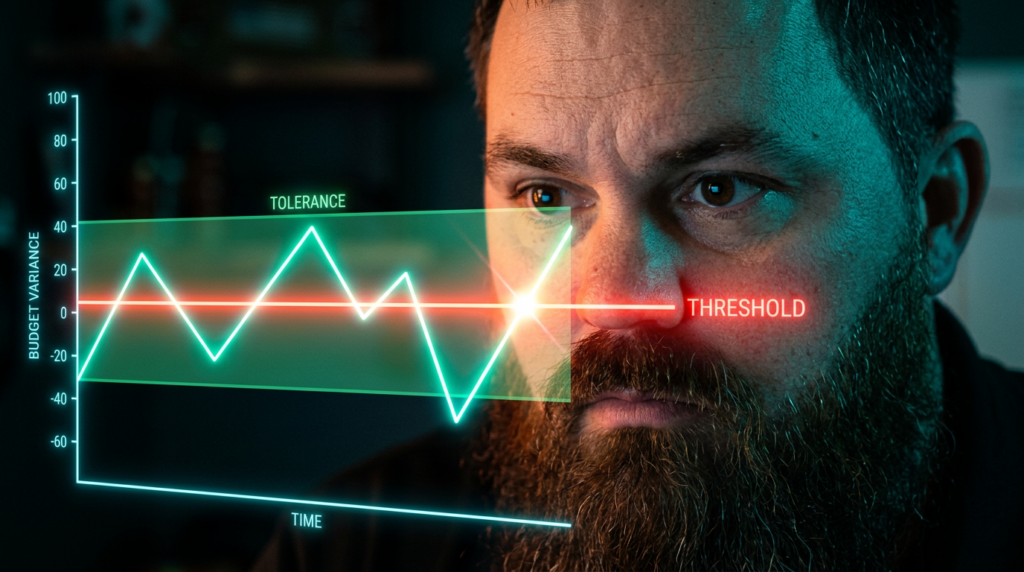
The project handover is one of the most dangerous moments in the project lifecycle. According to PMI’s Pulse of the Profession research, organizations waste 11.4% of their investment due to poor project performance and nowhere is that waste more concentrated than in the transition period when a new PM inherits a struggling initiative.
The incoming PM faces a classic information asymmetry problem: weeks or months of context compressed into a folder of documents, and perhaps 48 hours before the next steering committee meeting.
This is the ‘Cold Fallback PM’ scenario, and until recently, the playbook was manual, labor-intensive, and risky. Read everything. Interview stakeholders. Reverse-engineer the current state. Hope you catch the critical issues before they surface in front of executives. The average project manager spends 3-5 days just orienting to a new project. For a red-status project, that timeline compresses to hours, not days.
Enter document-first AI — a fundamentally different approach to project intelligence that treats the project folder as the source of truth, not the starting point for generic advice.
The Document-First AI Framework
Traditional AI tools operate in a vacuum. You describe your problem, the tool generates a response, and you adapt generic output to your specific context. This works for brainstorming. It does not work for project recovery.
Document-first AI inverts the model. Instead of describing the project to the tool, you load the project’s existing artifacts — status reports, risk registers, budget baselines, stakeholder communications, vendor contracts — and the tool synthesizes that institutional knowledge into actionable intelligence.
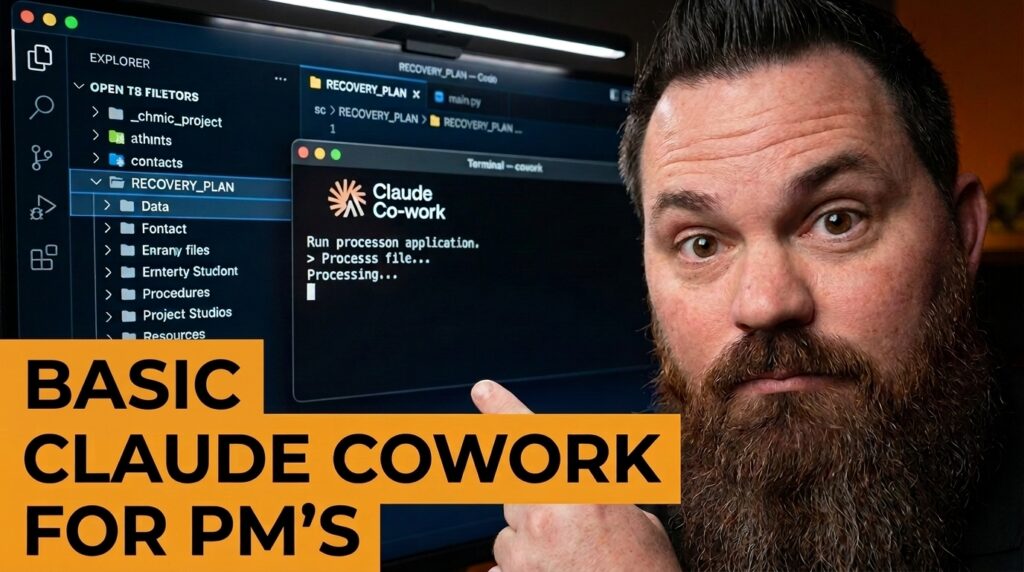
Claude Cowork, built on Anthropic’s Claude 3.7 Sonnet model, exemplifies this approach. When you point Cowork at a project folder containing 15-20 key documents, it does not simply summarize them. It builds a coherent mental model of the project state: what was promised, what was delivered, where the gaps are, who the critical stakeholders are, and what decisions are pending.
The framework operates in three phases:
Phase 1: Orientation
Load the complete project folder and request a project orientation summary. Cowork synthesizes the charter, status reports, and risk register to produce a current-state assessment.
This is not a document summary; it is a PM-ready briefing that identifies scope gaps, budget variances, schedule compression, vendor performance issues, and governance gaps.
In a live demonstration with a fictional project (Project Meridian — a data consolidation initiative inherited mid-flight), Cowork processed 17 documents and delivered a 1,200-word orientation brief in under three minutes.
The brief surfaced the critical issue: a vendor (Nexus Data Solutions) on a 30-day performance notice, with integration delays threatening the go-live date.
Phase 2: Deliverable Generation
With the project model established, Cowork can generate production-ready artifacts. These are not templates…. they are project-specific outputs built from the actual data in your folder.
In the Meridian demonstration, Cowork generated:
An updated Microsoft Project schedule in Excel format, re-baselined to account for integration delays
A budget reforecast showing the burn rate and projected cost overrun
An updated risk register using the 44RiskPM template, with re-scored risks and new mitigation strategies
A stakeholder communication plan addressing the executive sponsor (Diana Marsh) and the integration team lead (Priya Chaudhry)
An executive briefing one-pager for Diana Marsh with three decision points (go/no-go on Nexus, budget increase approval, and go-live date adjustment)
Each deliverable took 60-90 seconds to generate. The total output represented approximately one week of manual PM work.
Phase 3: Decision Support
The third phase addresses the strategic question: What should we do? Cowork does not make the decision, but it structures the decision space. In the Meridian case, the Nexus vendor decision required a go/no-go memo. Cowork synthesized the contract terms, performance history, alternative vendor options, and cost implications into a three-page decision memo with a clear recommendation: terminate Nexus, migrate to the in-house integration team, and adjust the timeline by six weeks.
This is PM thinking at speed. The tool did not replace judgment — it accelerated execution.
Why This Matters for Enterprise Project Management
The document-first approach solves a structural problem in project governance. Enterprise projects generate enormous volumes of documentation — charters, plans, status reports, risk registers, change logs, issue trackers. This documentation is supposed to create institutional memory. In practice, it creates information overload.
The incoming PM inheriting a project does not have time to read 200 pages of artifacts. But skipping that context means operating blind. Document-first AI closes the gap. It converts the project folder from a compliance artifact into an intelligence asset.
Three use cases stand out:
- Project handovers: Whether the prior PM resigned, was reassigned, or went on leave, the new PM needs to orient quickly. The Folder Method compresses weeks of ramp-up time into hours.
- Red project recovery: When a project hits red status, executives demand action plans immediately. Generating a recovery plan from scratch takes days. Cowork can produce a credible recovery roadmap in under an hour.
- Portfolio reviews: PMO leaders managing 15-20 concurrent projects cannot deep-dive into every initiative. Document-first AI enables rapid project health assessments without dedicating a full-time analyst to each project.
Implementation Considerations
This is not a plug-and-play solution. The quality of Cowork’s output depends entirely on the quality of the input documents. Garbage in, garbage out still applies.
Best practices for the Folder Method:
- Include baseline documents: The original charter, scope statement, and approved budget provide the reference point for variance analysis.
- Load recent status reports: The last 3-4 months of status reports capture the project trajectory and recurring issues.
- Include current risk and issue logs: These are the forward-looking intelligence — what could go wrong, what is going wrong.
- Add stakeholder artifacts: Meeting notes, email threads, and decision logs reveal the political and organizational context that does not appear in formal reports.
The folder should tell the story of the project. If a document does not contribute to that story, leave it out. Cowork can handle 15-20 documents comfortably. Beyond that, you are adding noise, not signal.
The Strategic Implication
Document-first AI does not replace the project manager. It changes what project managers spend their time on. Instead of synthesizing documents manually, PMs can focus on stakeholder management, decision-making, and risk mitigation, the high-judgment work that AI cannot do.
The Meridian demonstration showed this partnership in action. Cowork generated seven deliverables in 60 minutes (cut down to a 30-minute video). But every prompt was strategic: Which documents to load. What questions to ask. How to frame the decision memo for the executive sponsor. That was PM thinking. Cowork executed the thinking at speed.
For enterprise organizations running complex, multi-stakeholder projects, this represents a step-function improvement in project intelligence. The project folder is no longer just documentation. It is a queryable, executable knowledge base.
The Cold Fallback PM scenario… your PM just quit, the project is red, you have 48 hours to the steering committee, is no longer a worst-case scenario. With the Folder Method, it is a solved problem.
Watch the full demonstration: See this framework in action with the complete Project Meridian walkthrough, including live document generation and prompt design strategy:
Get the Claude for PMs Guide: Learn how to apply document-first AI to your projects with my comprehensive guide to using Claude tools for project and risk management:
About 44Risk PM, LLC
This analysis was prepared by 44Risk PM LLC, specializing in PMI-RMP® and PMP® certification training with a focus on practical, real-world risk management.
Contact:
Russ Parker
PMP®, PMI-RMP®, PMI-ACP®
PMI-ATP Instructor – PMP® & PMI-RMP®
Owner, Forty-Four Risk PM, LLC
An Approved PMI-Authorized Training Partner
Connect with me on Linkedin
Subscribe to my YouTube
Find me on Substack
“Stay Proactive Over Reactive”
“The PMI-Authorized Training Partner seal, PMP®, PMI-RMP®, and PMI-ACP® are registered marks of the Project Management Institute, Inc.”